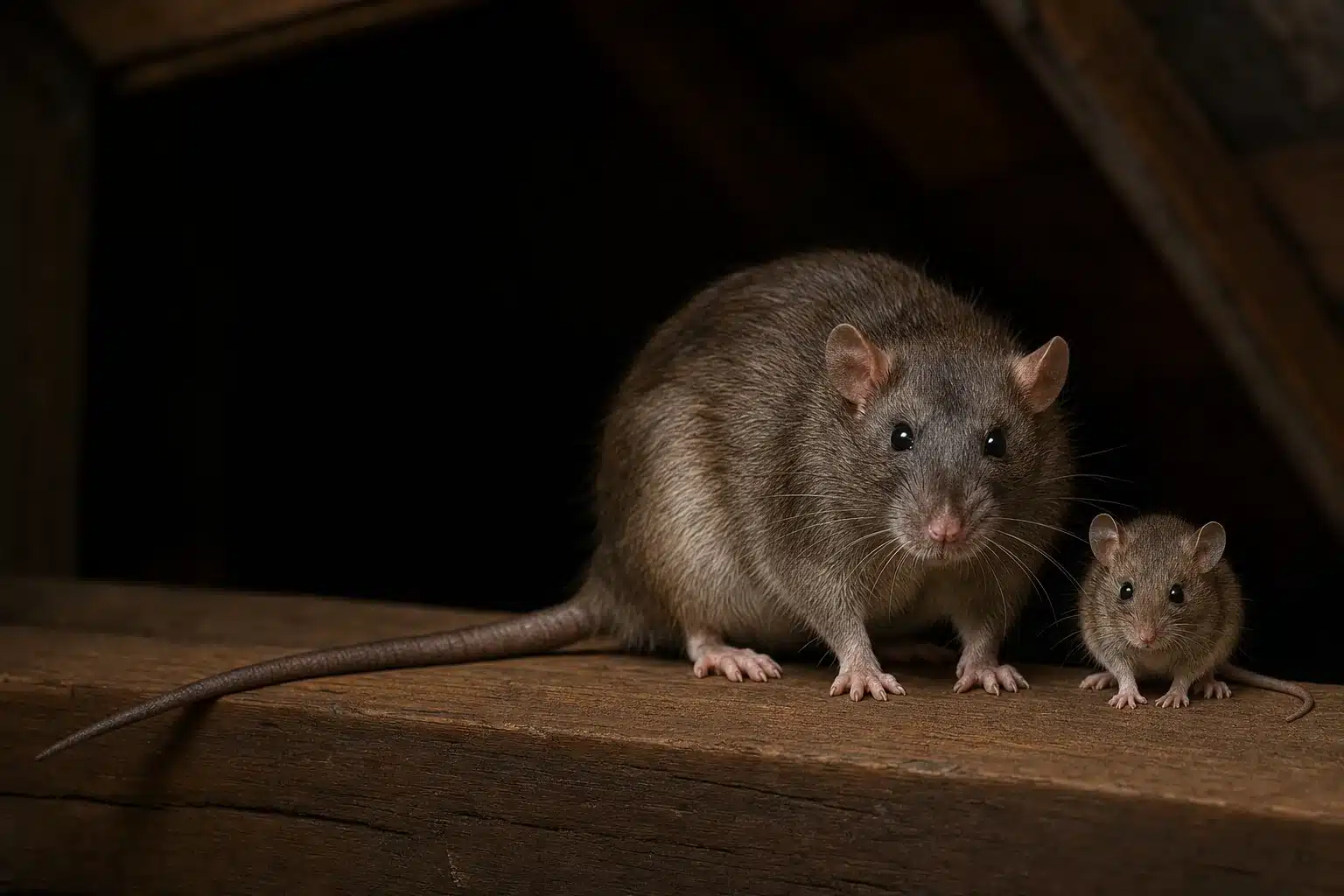
Rat and Mice Control Springvale 3171
Professional rat and mouse inspection, targeted control and practical proofing advice for Springvale homes and businesses. The assessment follows droppings, gnawing, food access and likely travel routes instead of relying on a generic treatment layout, assumptions or guesswork alone. Runway-control decisions also consider older roof tiles.
 4.9 Martin Pest Control Melbourne · 200+ Google reviews
Control the active rodents and reduce the way back in
The local service covers rat and mice control in Springvale 3171. A licensed member of the team checks droppings, gnawing, rub marks, food sources and accessible runways to distinguish roof rats, Norway rats and house mice. Treatment is selected for the customer’s property rather than placing products at random. Runway-control decisions also consider older roof tiles.
You receive a clear written quote before treatment begins, an explanation of safe placement and practical proofing priorities. Any two-year warranty on agreed proofing work is recorded in the written scope. Runway checks also consider older roof tiles.
What should you do if you see rats or mice?
Store food and pet feed in sealed containers, clean accessible spills and do not move droppings with a dry broom. Keep children and pets away from activity areas. A technician can confirm the species, pressure level and suitable control plan. Runway checks also consider older roof tiles.
Real possum and roof-pest field work
Possums are visible in some of these genuine Martin Pest Control videos, and we label that honestly. The team works across possum, rat, mouse and other roof-pest issues; the footage shows practical access methods rather than pretending every clip concerns the same animal. Runway checks also consider older roof tiles.
A Melbourne service people already know
4.9 200+ Google reviewsClear information before work
Check Martin Pest Control’s current public feedback on Google before booking. The pest professional explains the proposed scope and firm quote for the agreed scope before agreed work starts. Runway checks also consider older roof tiles.
How to describe rats or mice before a Springvale inspection
Timing, height and location help separate species. A roof rat may travel above the ceiling, a Norway rat may leave ground-level burrows, and a house mouse can remain close to food and small wall gaps. Runway checks also consider older roof tiles.
Noise high or low in the building
Record whether scratching comes from the roof, wall, subfloor, garage or kitchen rather than describing the whole property as affected. Runway checks also consider older roof tiles.
Repeated sightings at one time
Note whether activity appears after lights go out, near dawn or during quiet daytime periods in a commercial site. Runway checks also consider older roof tiles.
New gnawing and nesting material
Shredded paper, insulation or packaging beside fine tooth marks can identify a harbourage zone that needs closer inspection. Runway checks also consider older roof tiles.
Why local building details change the service plan
Springvale contains post-war houses, subdivided blocks, compact townhouses, apartments and mixed-use buildings. Rats and mice can move between gardens, bin areas, garages, roof voids and adjoining commercial sites. mature gardens, busy shopping streets and tightly spaced properties with many sheltered travel routes can provide cover, water and food, but indoor control still depends on identifying the active species and the routes being used at that property. Runway-control decisions also consider older roof tiles.
Particular attention is given to older roof tiles, extensions, party-wall cavities, shop awnings, rear storerooms and pipe penetrations. Roof rats favour elevated routes, Norway rats are more likely around ground-level shelter and drains, while house mice can use much smaller gaps. Evidence decides where monitoring or treatment is placed. Runway checks also consider older roof tiles.
Mixed property layouts
The plan must suit post-war houses, subdivided blocks, compact townhouses, apartments and mixed-use buildings, not a generic floor plan. Runway checks also consider older roof tiles.
Likely access zones
Inspection focuses on older roof tiles, extensions, party-wall cavities, shop awnings, rear storerooms and pipe penetrations.
Residential and commercial
food businesses, shops, markets, storerooms, offices and high-turnover rental accommodation can need different access, reporting and treatment arrangements. Runway checks also consider older roof tiles.
Springvale has many rented and multi-occupancy properties. Clear photos and a written scope can help tenants, agents and owners agree on the next step without repeated site visits. Runway-control decisions also consider older roof tiles.
How professional rat and mice control works
Good rodent control combines identification, targeted treatment, hygiene and exclusion. The pest professional explains which actions are included now and which proofing or building work should follow. Runway checks also consider older roof tiles.
Discuss the signs
We record sightings, noises, droppings, food damage, pet activity and any previous treatment.
Inspect active zones
Accessible roof, subfloor, garage, kitchen, perimeter and waste areas are checked for runways and harbourage.
Confirm species and pressure
Dropping shape, gnawing, rub marks, burrows and movement height help separate rats from mice.
Choose targeted control
Monitoring, traps or secured bait stations are selected and placed according to evidence and product directions.
Prioritise proofing
The pest professional identifies practical gaps around eaves, pipes, doors, vents and roof junctions for staged sealing.
Explain monitoring
You receive safety advice, likely timing and any follow-up or station-management requirements for the selected method.
Roof rat, Norway rat or house mouse?
Victoria’s Department of Health identifies the roof rat, Norway rat and house mouse as the main introduced pest rodents. Correct identification matters because climbing behaviour, burrowing, food preferences and gap sizes differ. Runway checks also consider older roof tiles.
| Likely pest | Common evidence | Areas to inspect |
|---|---|---|
| Roof rat | Slender droppings, elevated travel, fruit or stored-food disturbance | Roof voids, vines, trees, fences, rafters and upper service routes |
| Norway rat | Larger droppings, burrows, ground-level rub marks and heavy gnawing | Subfloors, drains, bin areas, sheds and dense ground cover |
| House mouse | Small irregular droppings, light scratching and fine gnaw marks | Kitchen edges, cupboards, appliances, wall voids and small service gaps |
See the Department of Health’s current Victorian rodent control guidance for identification, sanitation, exclusion and pesticide safety information. Runway checks also consider older roof tiles.
Safe placement matters
Rodent products must be used according to their labels and kept away from children, pets, wildlife and food areas. Where bait is suitable, lockable stations and recorded placements support safer control. The treatment choice can be different for a roof, kitchen, pet property or food business. Runway checks also consider older roof tiles.
Proofing works best after the active routes are understood
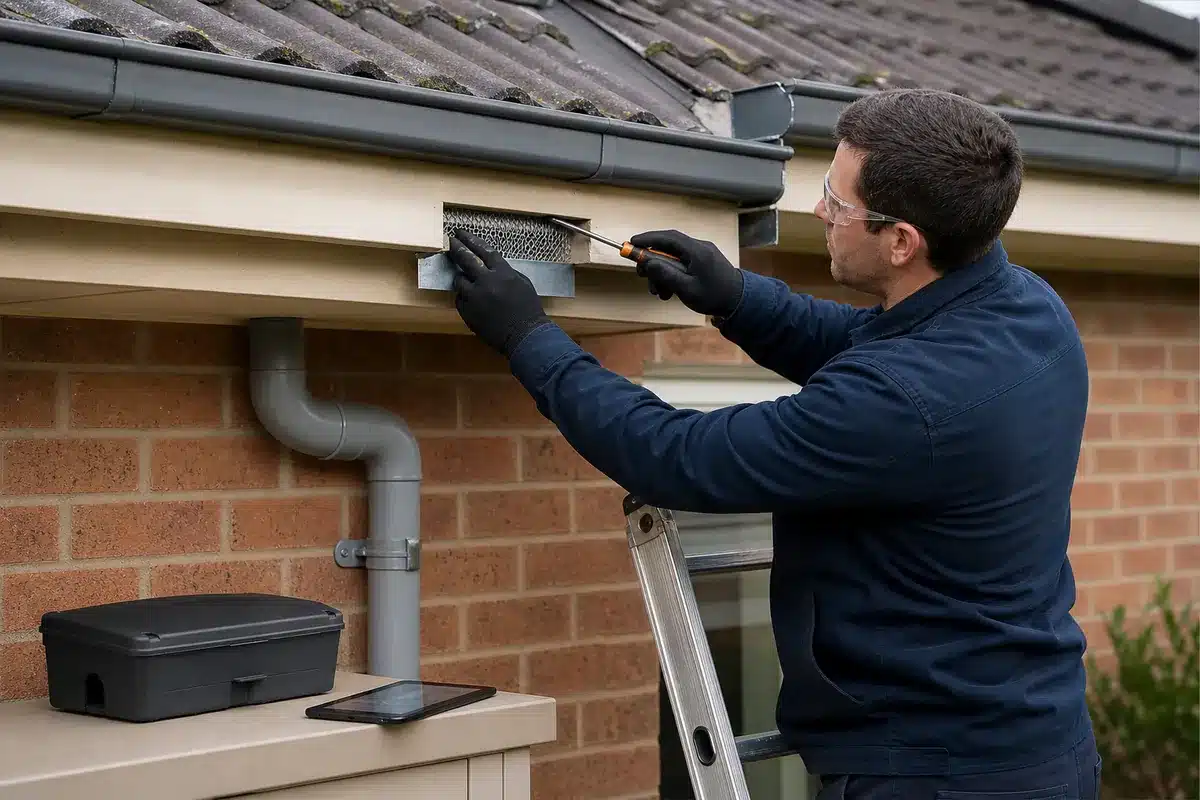
Sealing every visible gap before treatment can trap rodents in a wall or redirect them into another room. The pest professional prioritises the routes supported by evidence, then explains staged proofing with durable materials. Expanding foam alone is not a reliable barrier where rodents can reach it. Runway checks also consider older roof tiles.
- Repair damaged eaves, vents and fascia with suitable materials
- Use metal mesh or flashing around practical service gaps
- Fit door sweeps where light is visible below external doors
- Store pet food, bird seed and dry goods in sealed containers
- Keep bins closed and clean food residue around outdoor areas
- Trim dense vegetation and remove sheltered clutter near walls
Major roofing, electrical, plumbing or building repairs should be completed by the appropriate qualified trade. The pest inspection helps identify and prioritise those areas rather than hiding them under a vague treatment promise. Runway checks also consider older roof tiles.
Reduce easy food while keeping identification evidence
Place open food, pet biscuits and bird seed in firm sealed containers. Clean accessible crumbs and spills, close bins and remove water where practical. Before cleaning droppings or damage, take clear photographs and note the affected room so the attending technician can reconstruct the activity pattern. Runway checks also consider older roof tiles.
Avoid scattering supermarket bait through a roof or garden immediately before inspection. Unrecorded products can complicate species assessment, create risks for pets and wildlife, and lead to carcasses in inaccessible cavities. Tell the attending technician exactly what has already been used. Runway checks also consider older roof tiles.
- Record night-time roof noise separately from kitchen sightings
- Keep pets out of rooms with droppings, traps or damaged food
- Do not dry sweep or blow contaminated dust through the room
- Check that the roof manhole and subfloor entry are accessible
- Photograph burrows, gaps and rub marks from a safe position
- Arrange owner permission for sealing or building repairs
Proof the confirmed route with durable materials
Rodents can gnaw soft fillers and may use gaps around pipes, vents, doors, eaves and roof junctions. Metal mesh, flashing, suitable seals and sound building repairs are more useful than exposed foam alone. The active population should be understood before all routes are closed. Runway checks also consider older roof tiles.
In Springvale, older roof tiles, extensions, party-wall cavities, shop awnings, rear storerooms and pipe penetrations deserve particular attention. The pest professional can separate urgent openings from general maintenance and explain which work belongs to pest control, roofing, carpentry, plumbing or electrical trades. Runway-control decisions also consider older roof tiles.
Continue removing food and shelter after treatment. Keep bins closed, store bulk goods off the floor, trim dense vegetation beside walls and monitor new droppings. At food businesses, shops, markets, storerooms, offices and high-turnover rental accommodation, nominate a staff member to record sightings and cleaning issues so the service history remains consistent between visits. Runway checks also consider older roof tiles.
Rat and Mice Control questions from Springvale customers
Do you remove dead rodents after treatment?
Tell the attending technician immediately if a carcass becomes accessible or an odour develops. Removal depends on location and safe access, and may be quoted separately from the control plan. Runway checks also consider older roof tiles.
What happens at the first inspection?
The pest professional provides a clear written quote for the agreed treatment before it starts. Runway checks also consider older roof tiles.
How do I book rodent control?
Call 0435 073 966 or use the inline form. For broader information, visit our Melbourne rodent control page. Runway checks also consider older roof tiles.
Do you treat both rats and mice in Springvale?
Yes. The initial inspection looks for species-specific evidence because roof rats, Norway rats and house mice use different routes and may require different placement or proofing priorities. Runway checks also consider older roof tiles.
Will sealing gaps solve the problem immediately?
Proofing is important, but sealing too early can trap active rodents or move them elsewhere. Inspection and control should guide the order of closing confirmed routes. Runway checks also consider older roof tiles.
Arrange rat and mice control in Springvale 3171
Tell us what you have noticed and where it is happening. Martin Pest Control will arrange an inspection, explain the suitable next step and provide a clear quote before agreed work begins. Runway checks also consider older roof tiles.